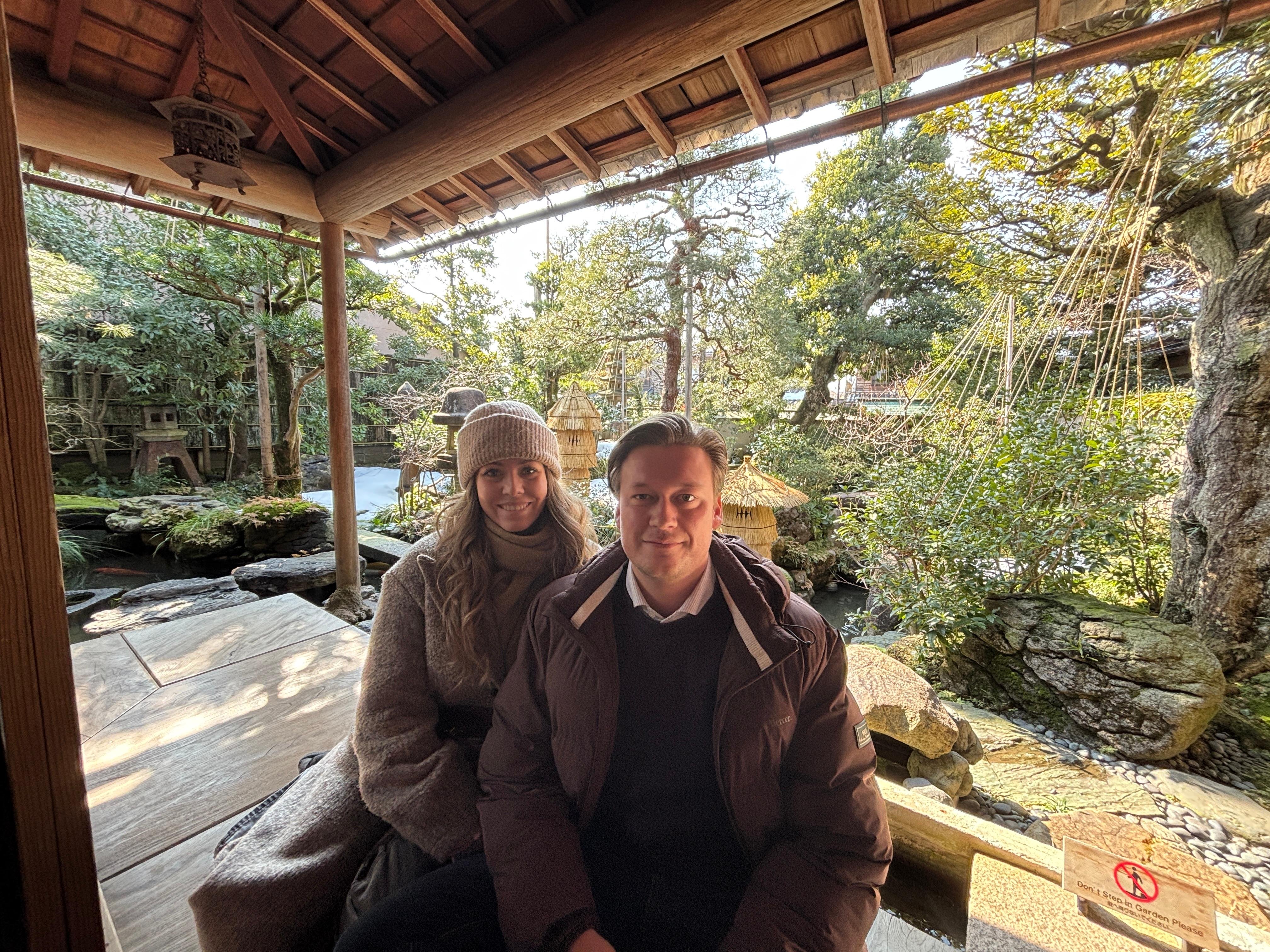
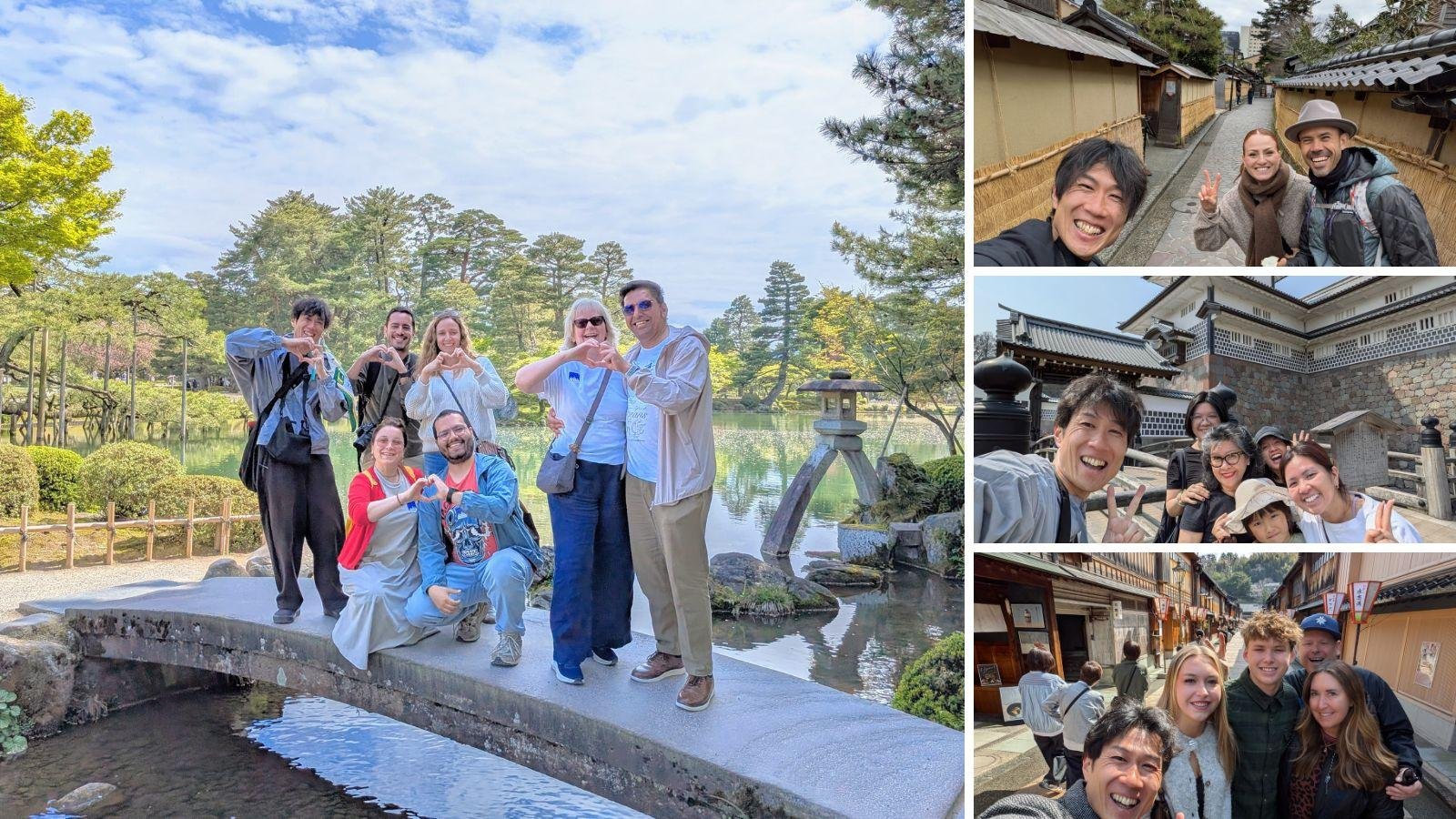
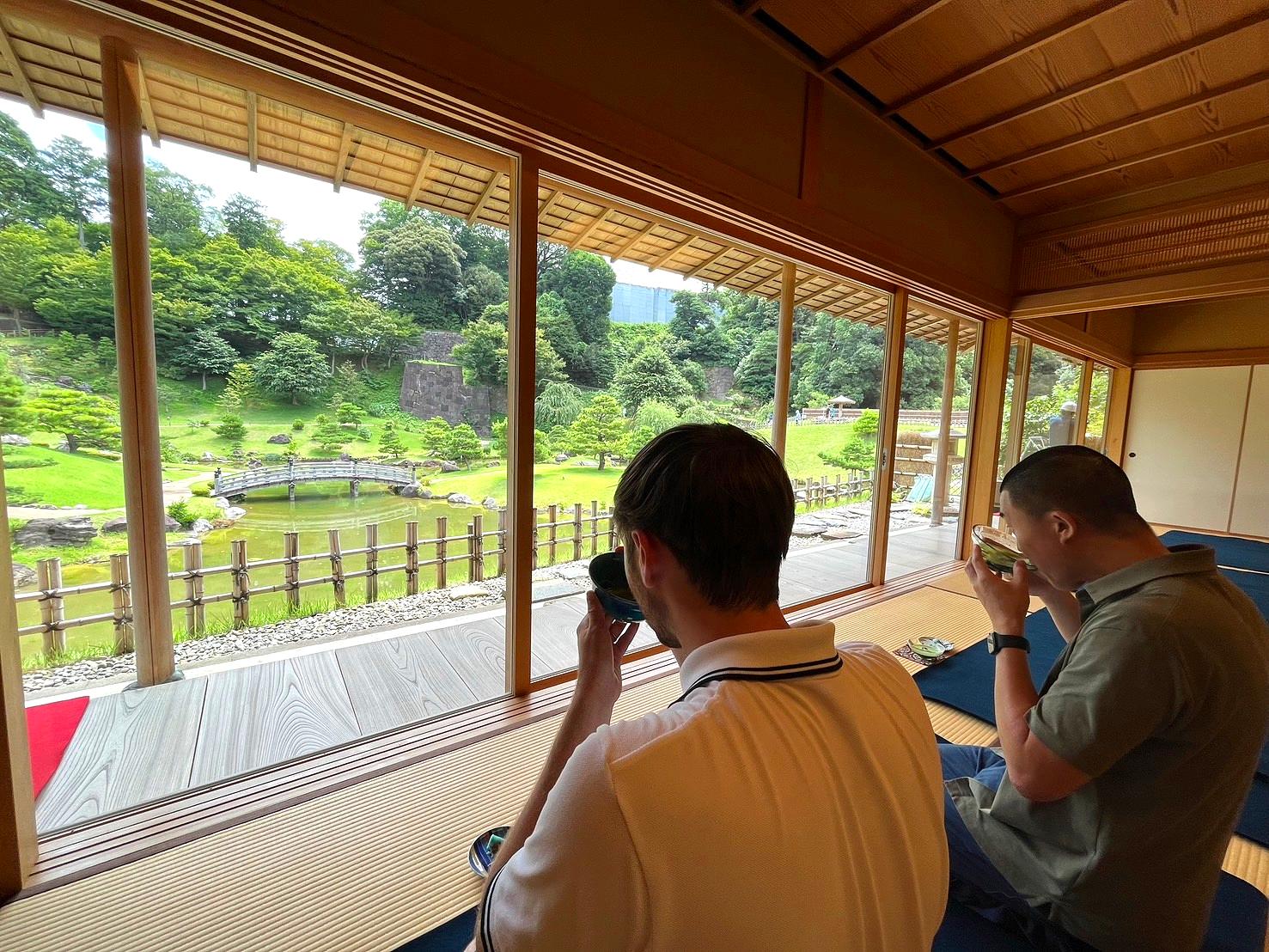
"What a fun time! Me and my friends loved the experience. It was easy to understand and we learned a lot from it!"
A Sword Lesson in a Temple · From $86
Samurai Experience in Kanazawa
The everyday way to hold a sword in Kanazawa: an hour with an instructor in a temple, in a samurai kimono, with photos and video sent afterwards. Nagamachi, the samurai district below the castle, fills the rest of the day.
From
$86
per person
Free cancellation
- 5.0 / 5 105+ Reviews
- 4 cities Kyoto, Osaka, Kanazawa, Tokyo
- $23–$300+ Museum ticket to private master
- Free Cancellation
The Experience
What the Temple Sword Lesson Includes
合同会社ゼローム ZEROUM LLC's own highlights, inclusions and notes, as listed on GetYourGuide in October 2026.
Highlights
- Feel the thrill of becoming a samurai in the historic town of Kanazawa
- Learn the basics of swordsmanship from a master in a private setting
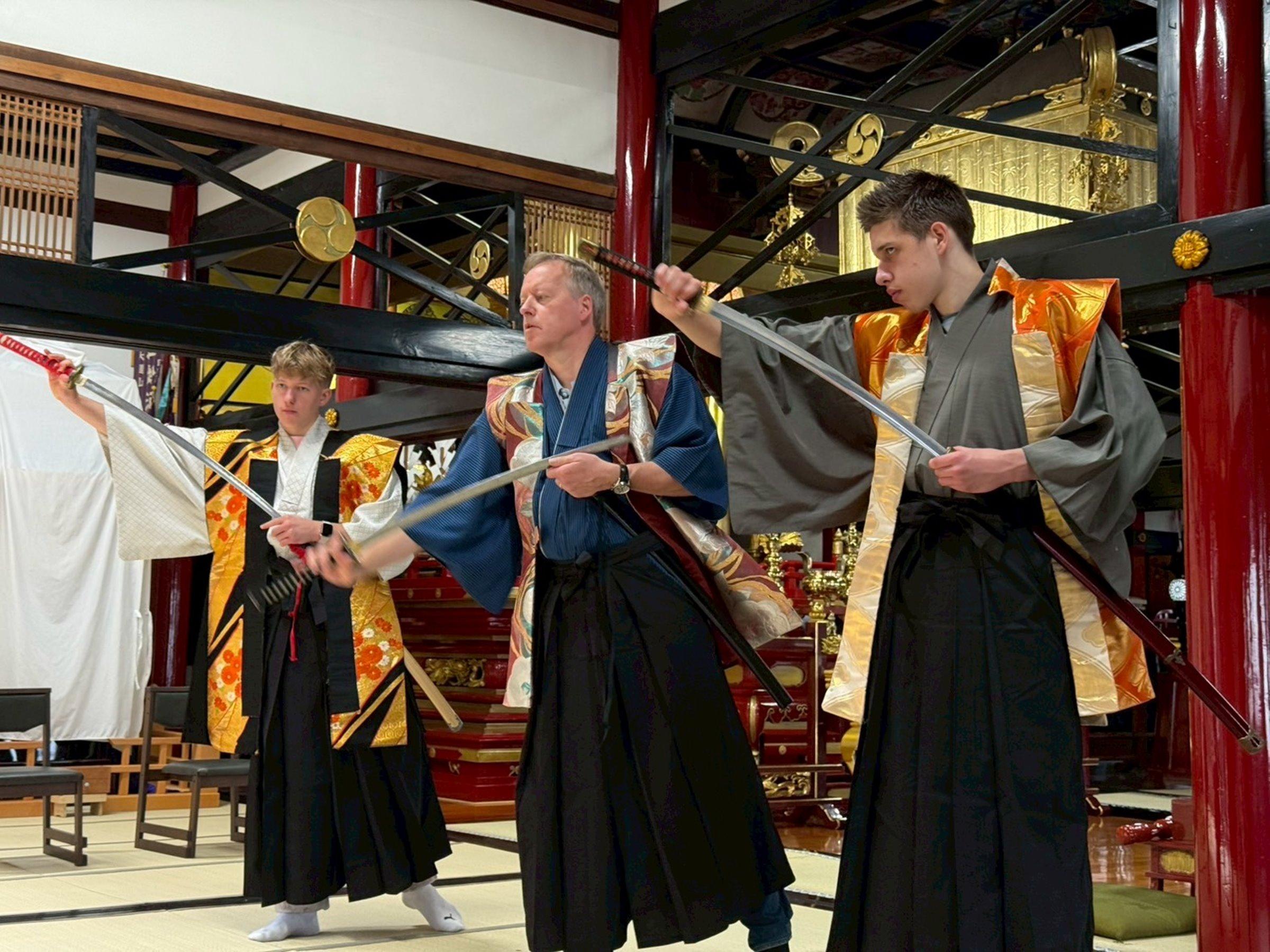
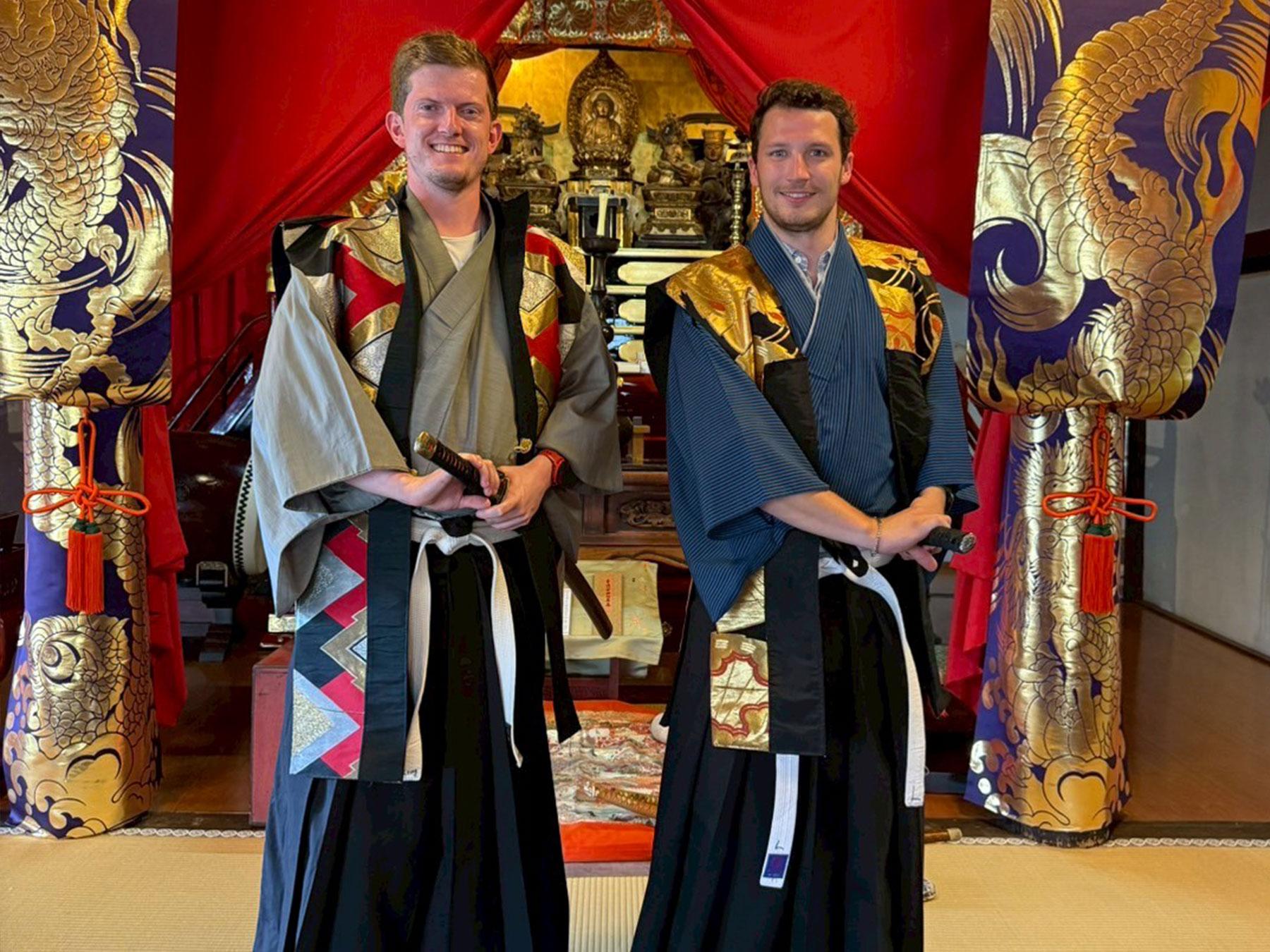
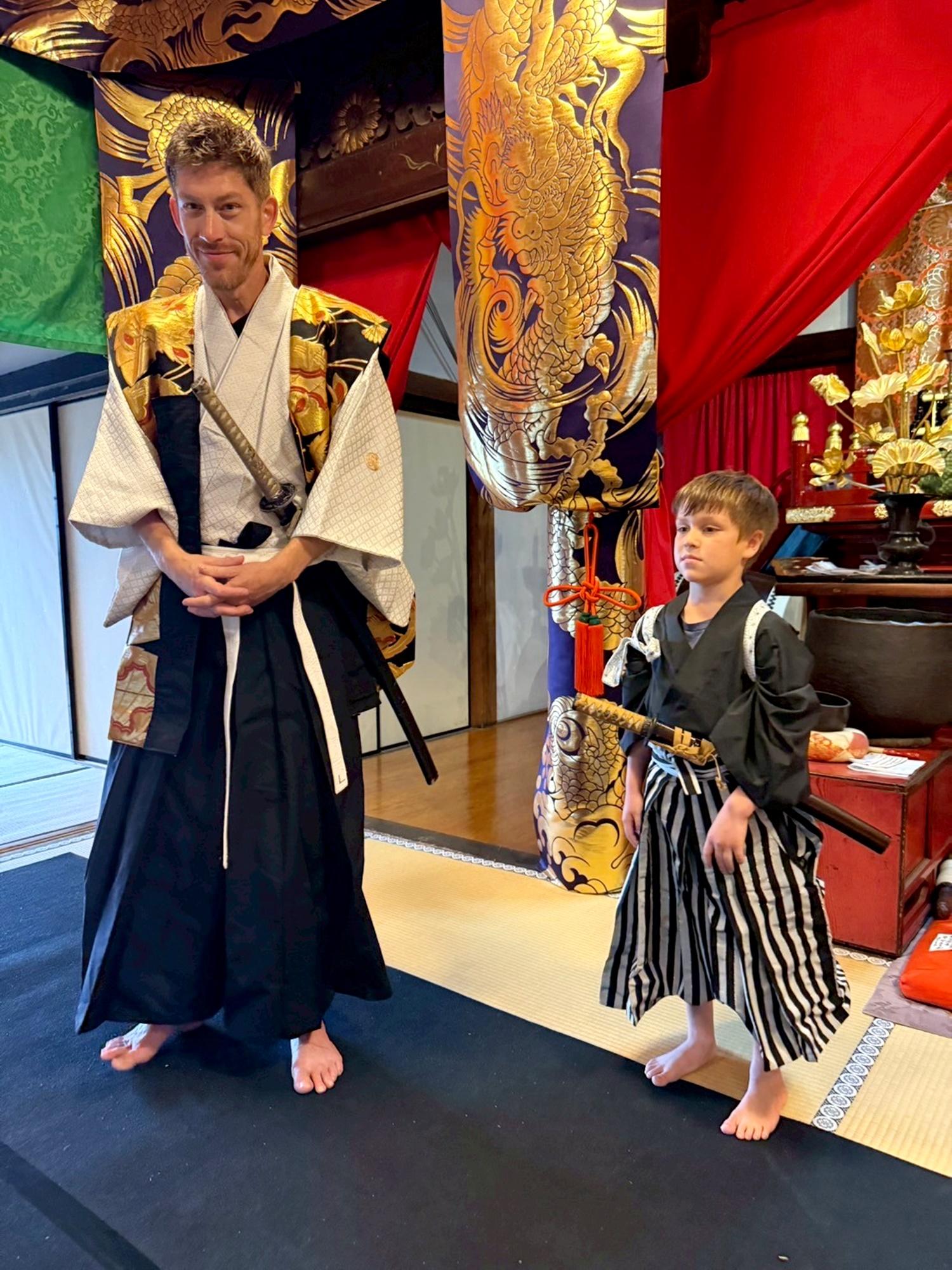
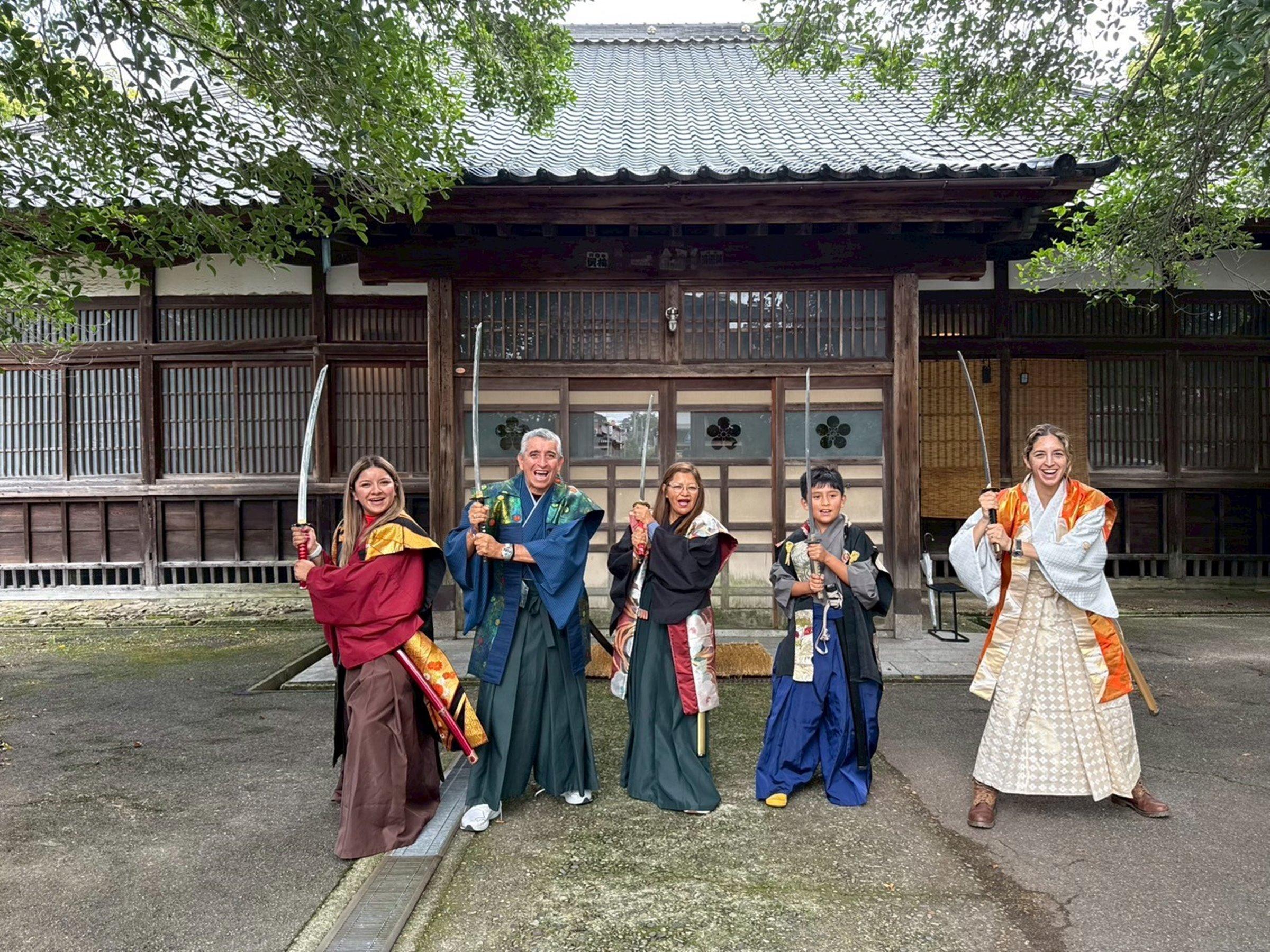
- Wear a traditional samurai kimono and immerse yourself in the experience
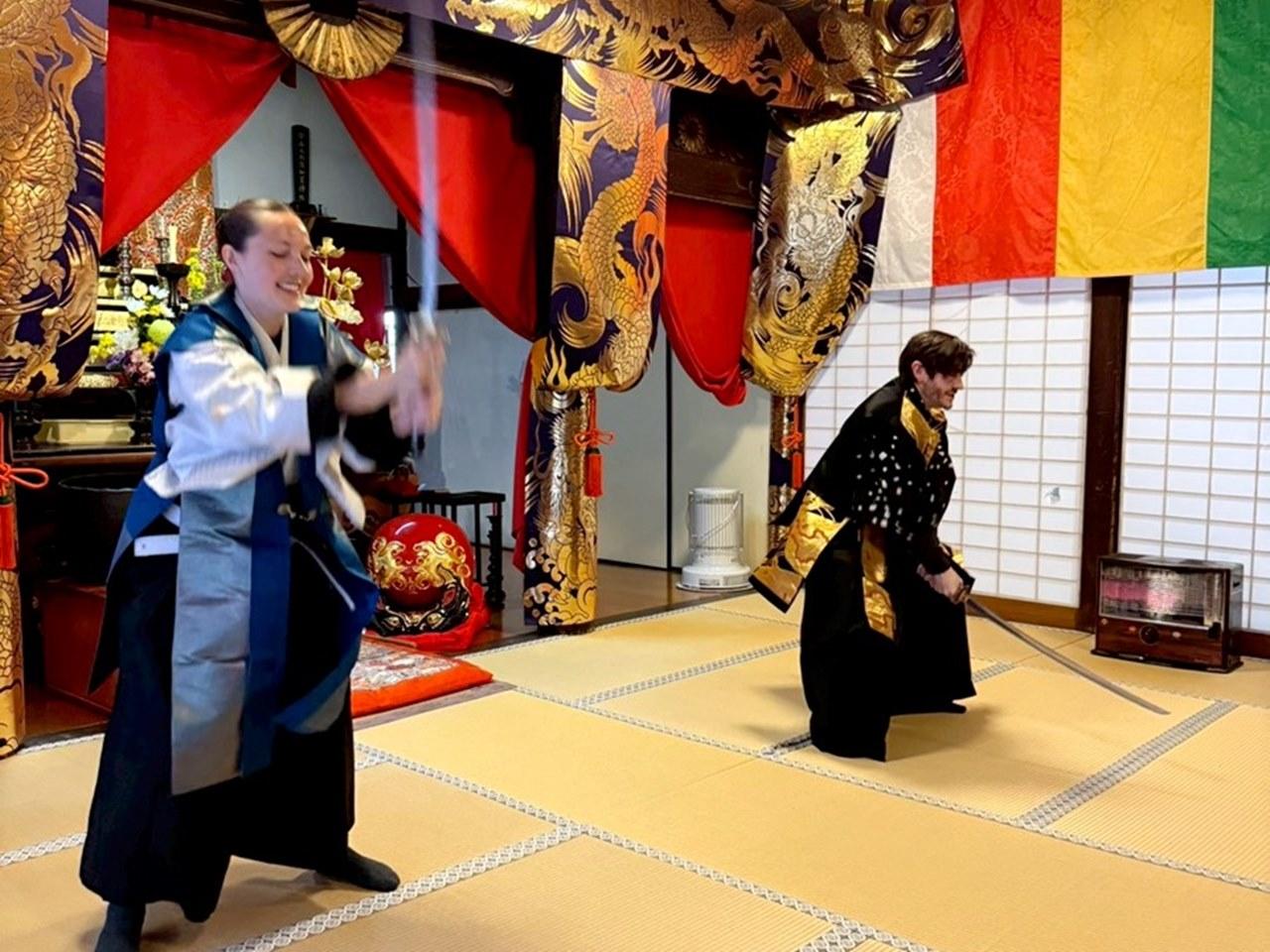
- Enjoy a private lesson in a rented temple for an authentic atmosphere
- Receive training photos to remember your unique experience
What's Included
- Samurai kimono rental
- Swordmanship lesson
- Training videos and images(I'll email you the photos later.)
How the Temple Lesson Runs
About an hour, two people minimum, in simple English.
Into the Kimono
You change into a samurai kimono, included in the price. Wear comfortable clothes underneath.
Some History First
A short introduction to the samurai and the sword, in simple English, before anyone picks one up.
Stance, Draw, Cut
The basics of swordsmanship, drilled with the instructor. The booking minimum is two people.
Photos and Video
The session is photographed and filmed, and the files are emailed to you afterwards.
Photo Gallery
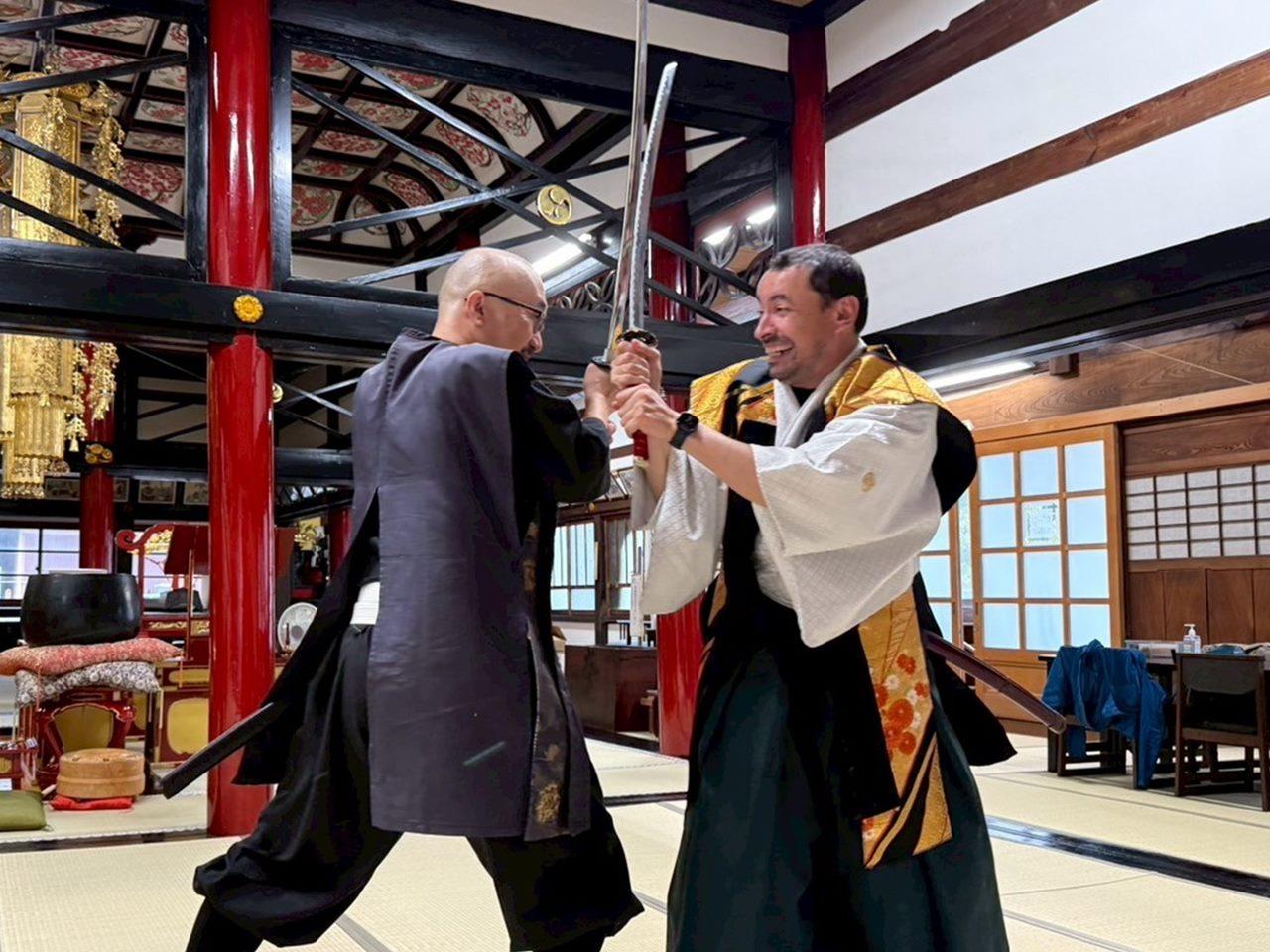
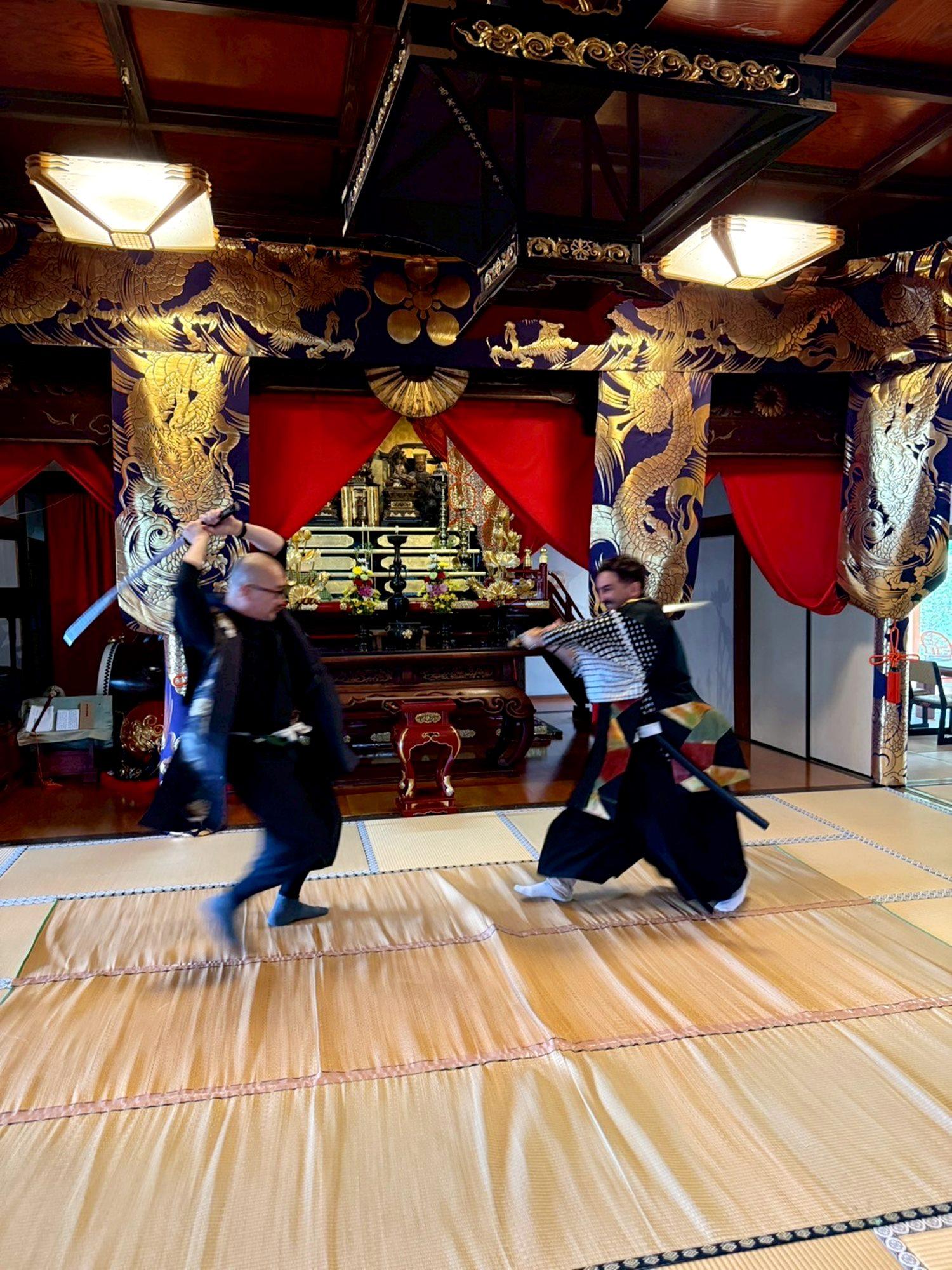
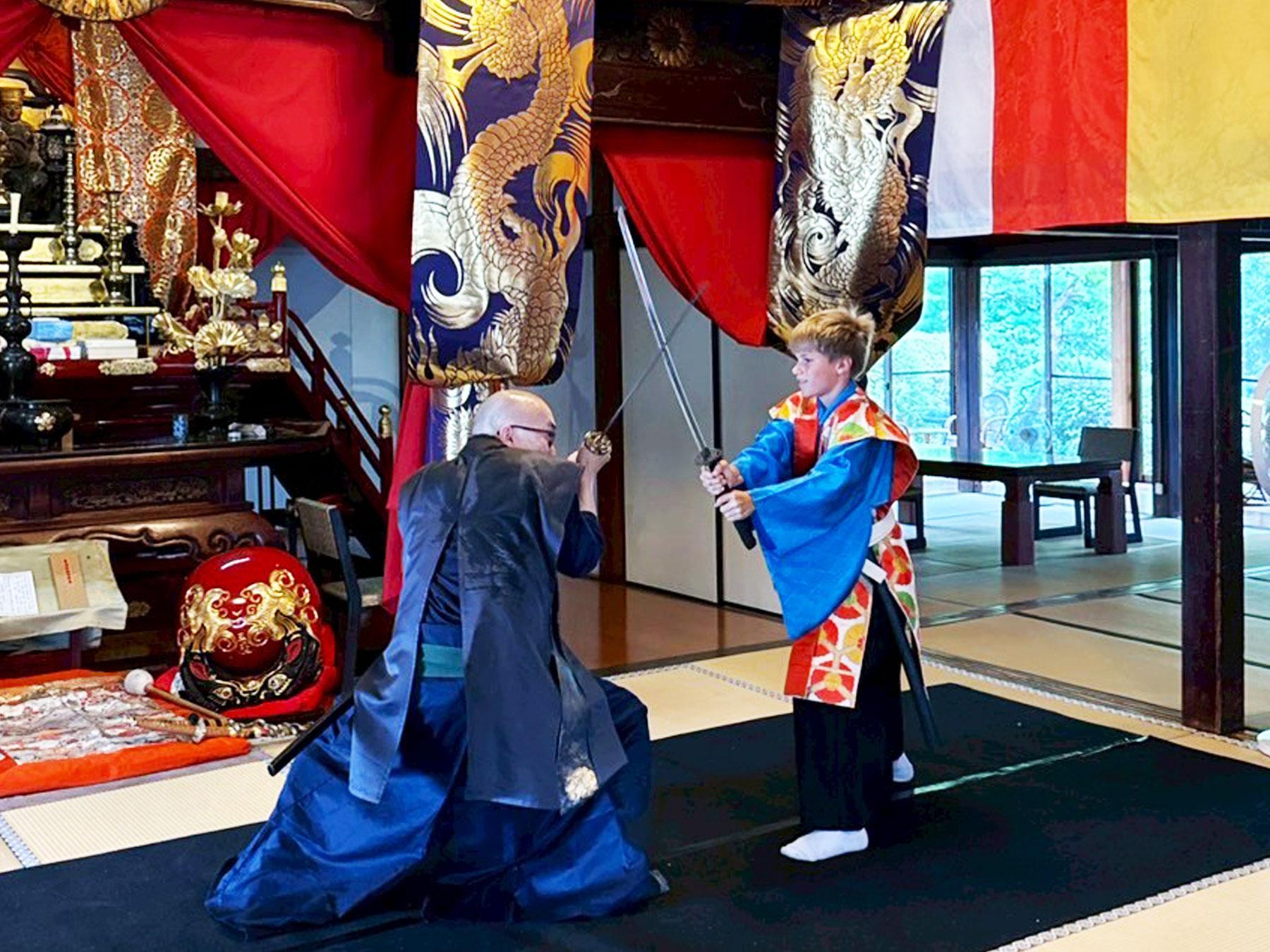
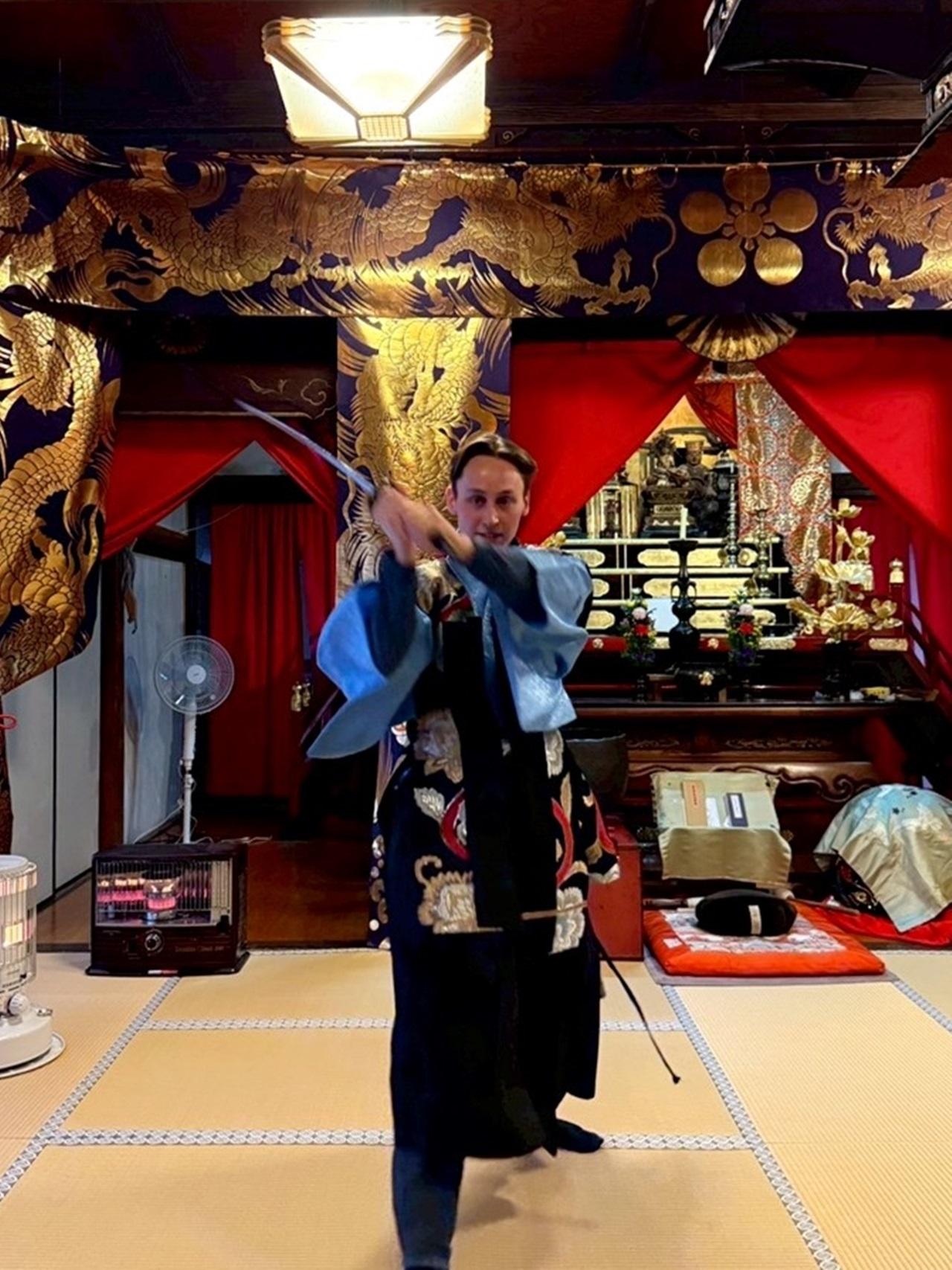
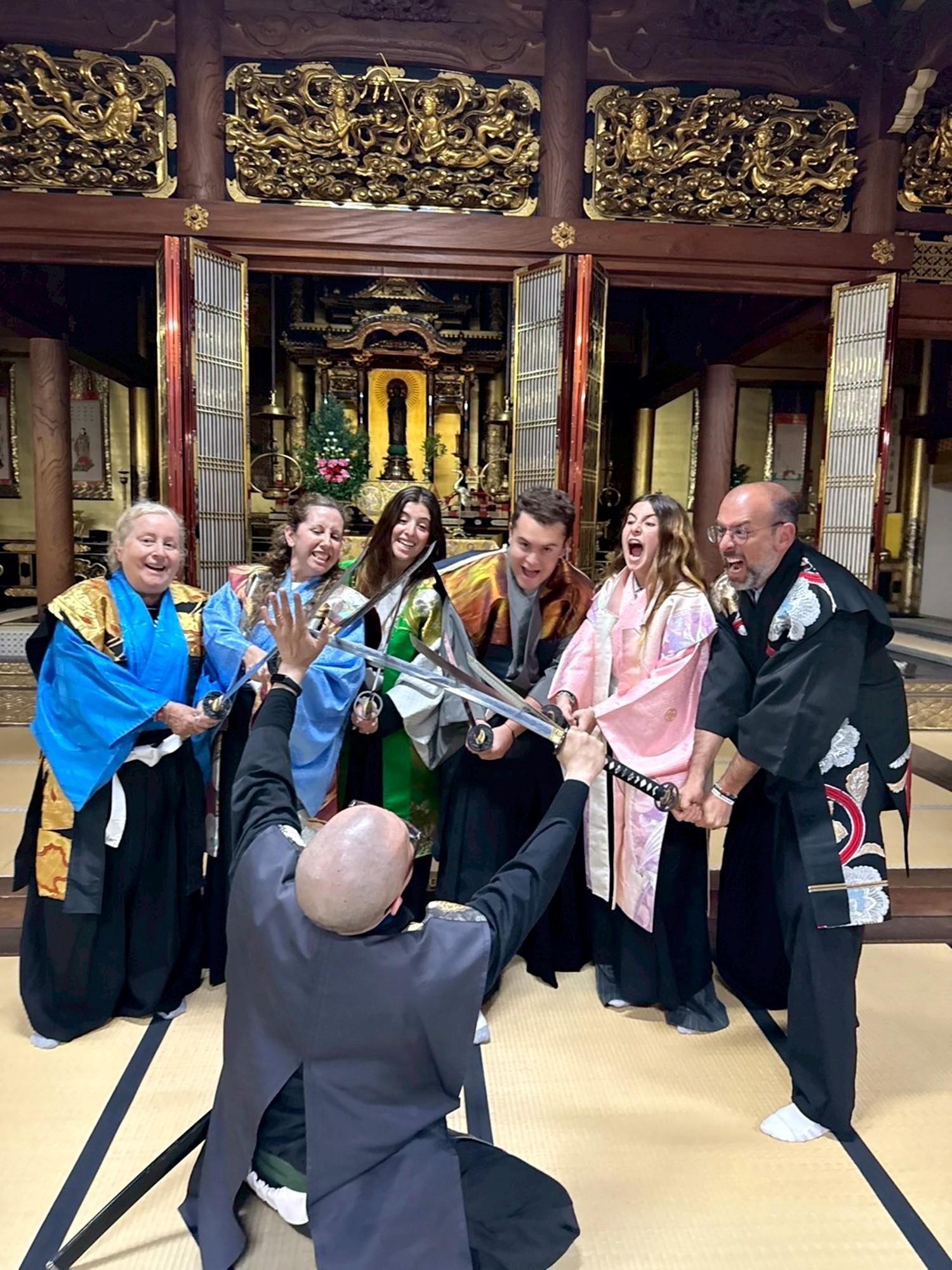
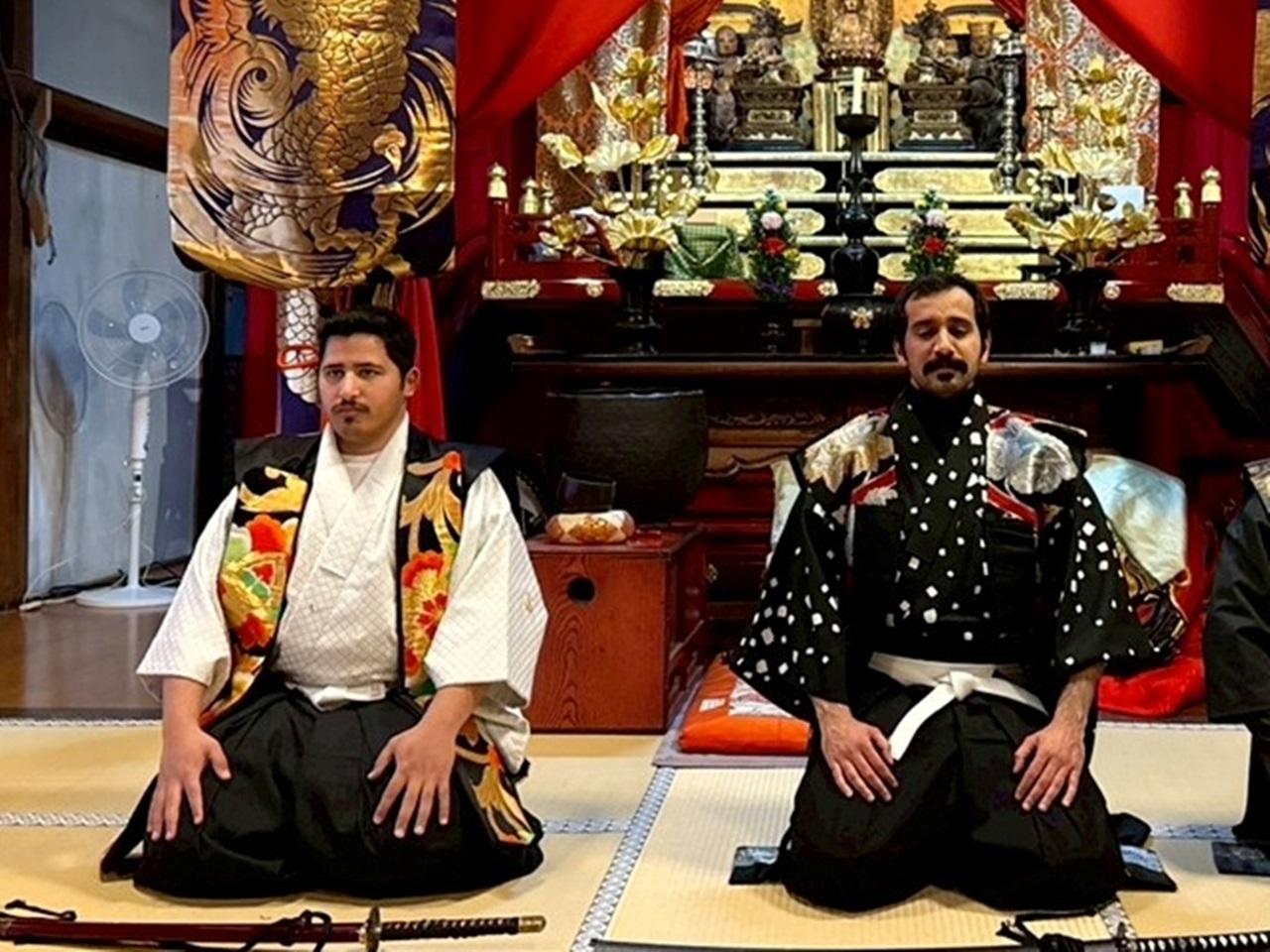
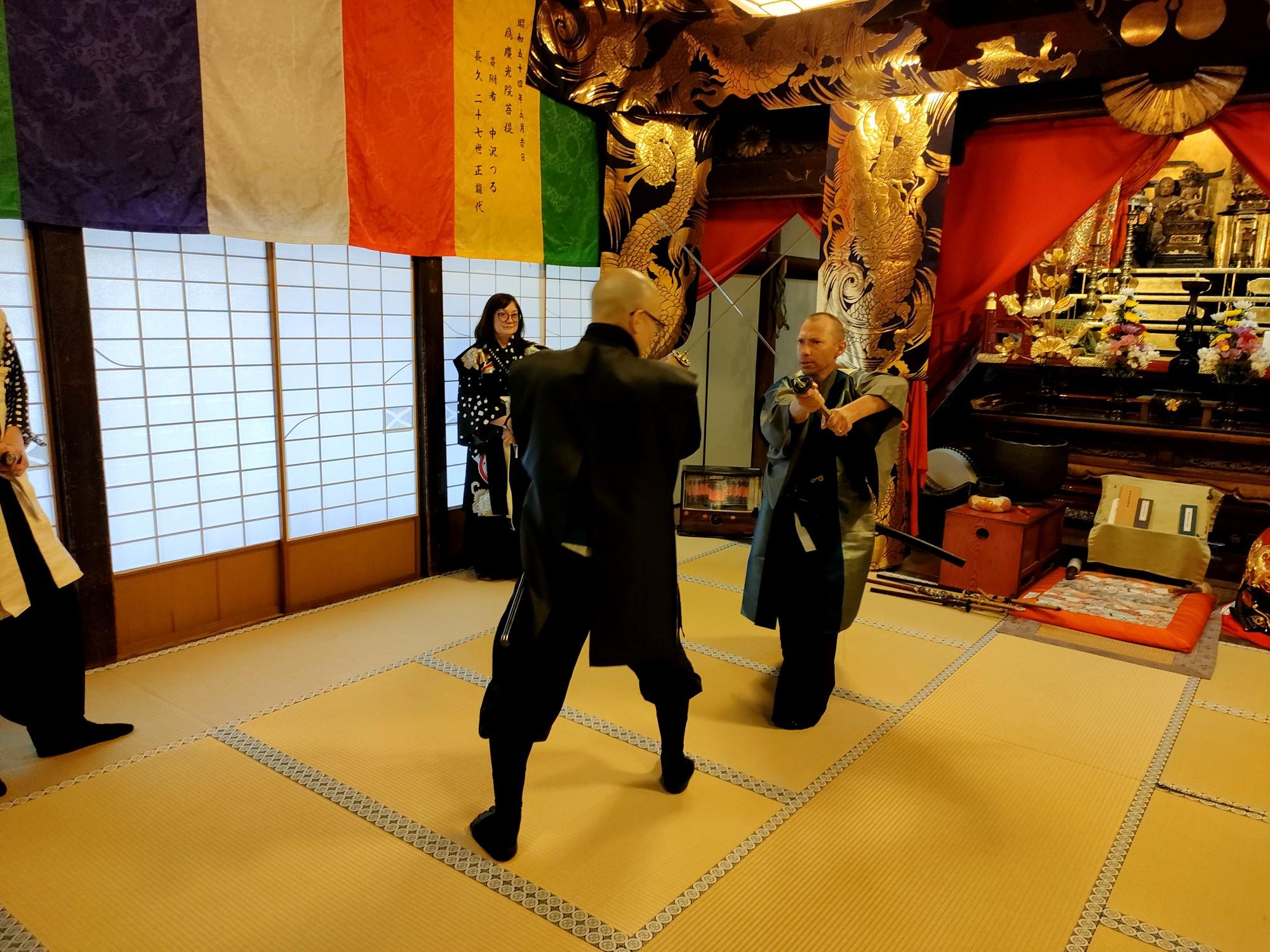
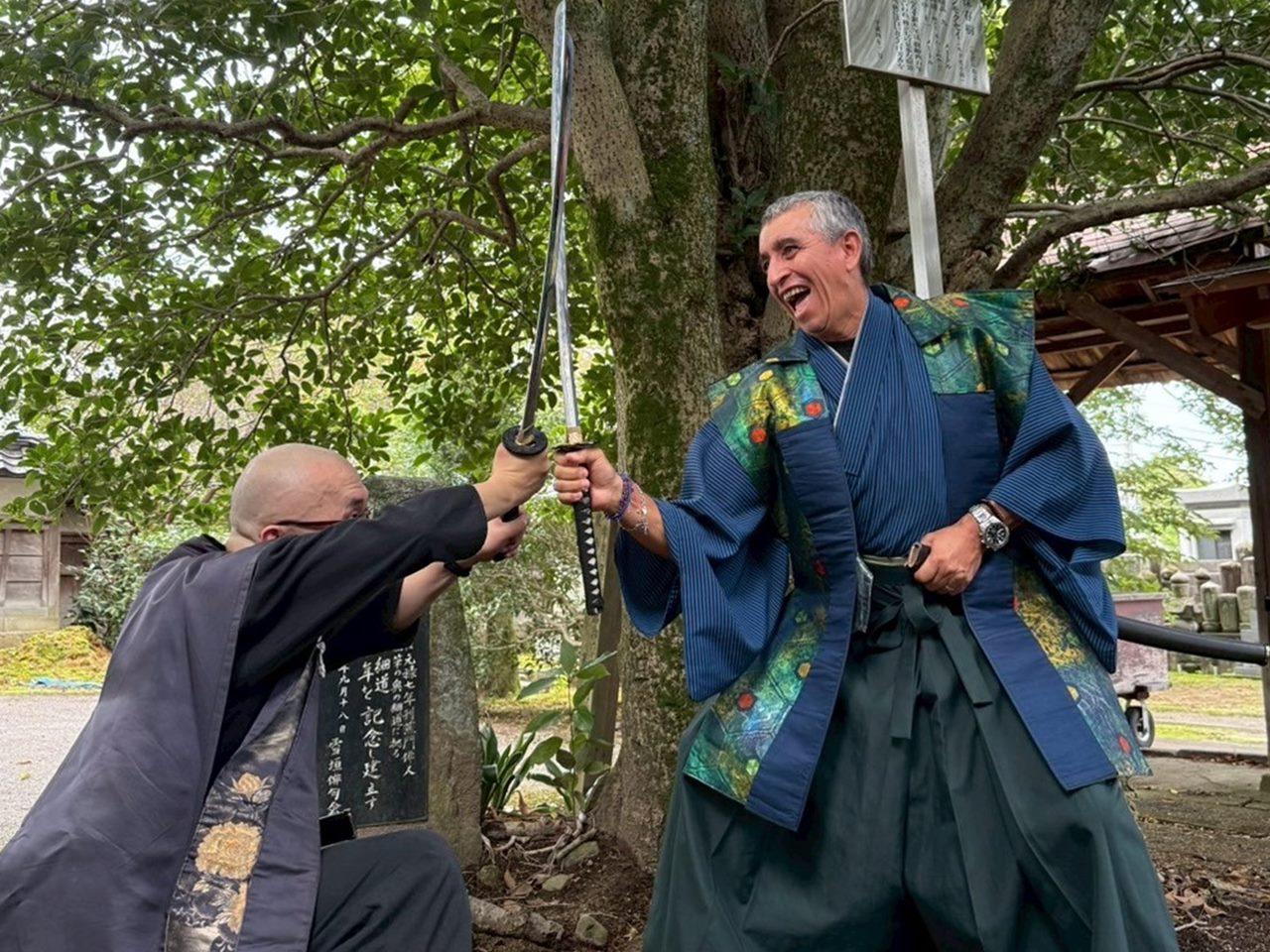
The Lesson in the Temple
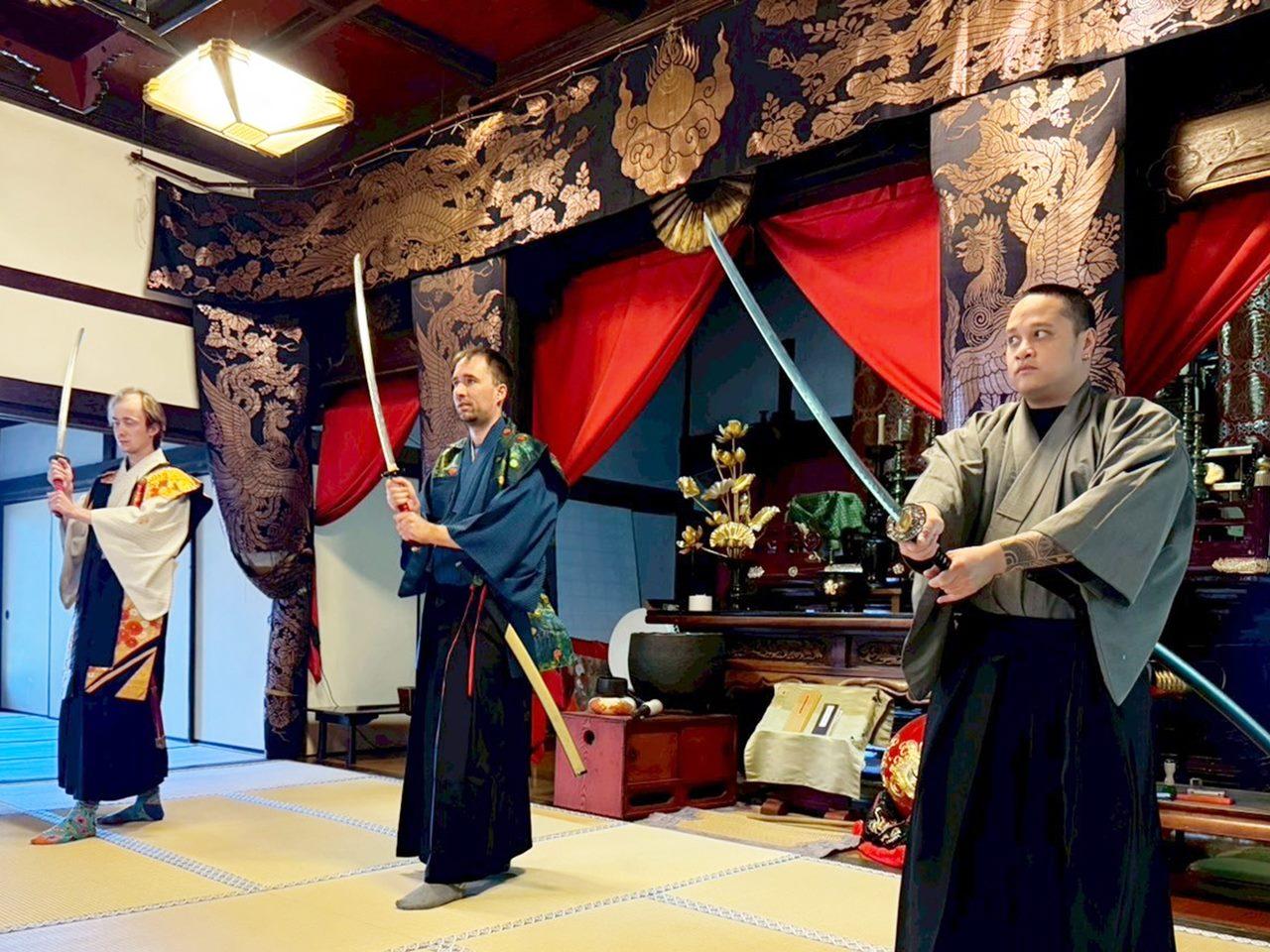
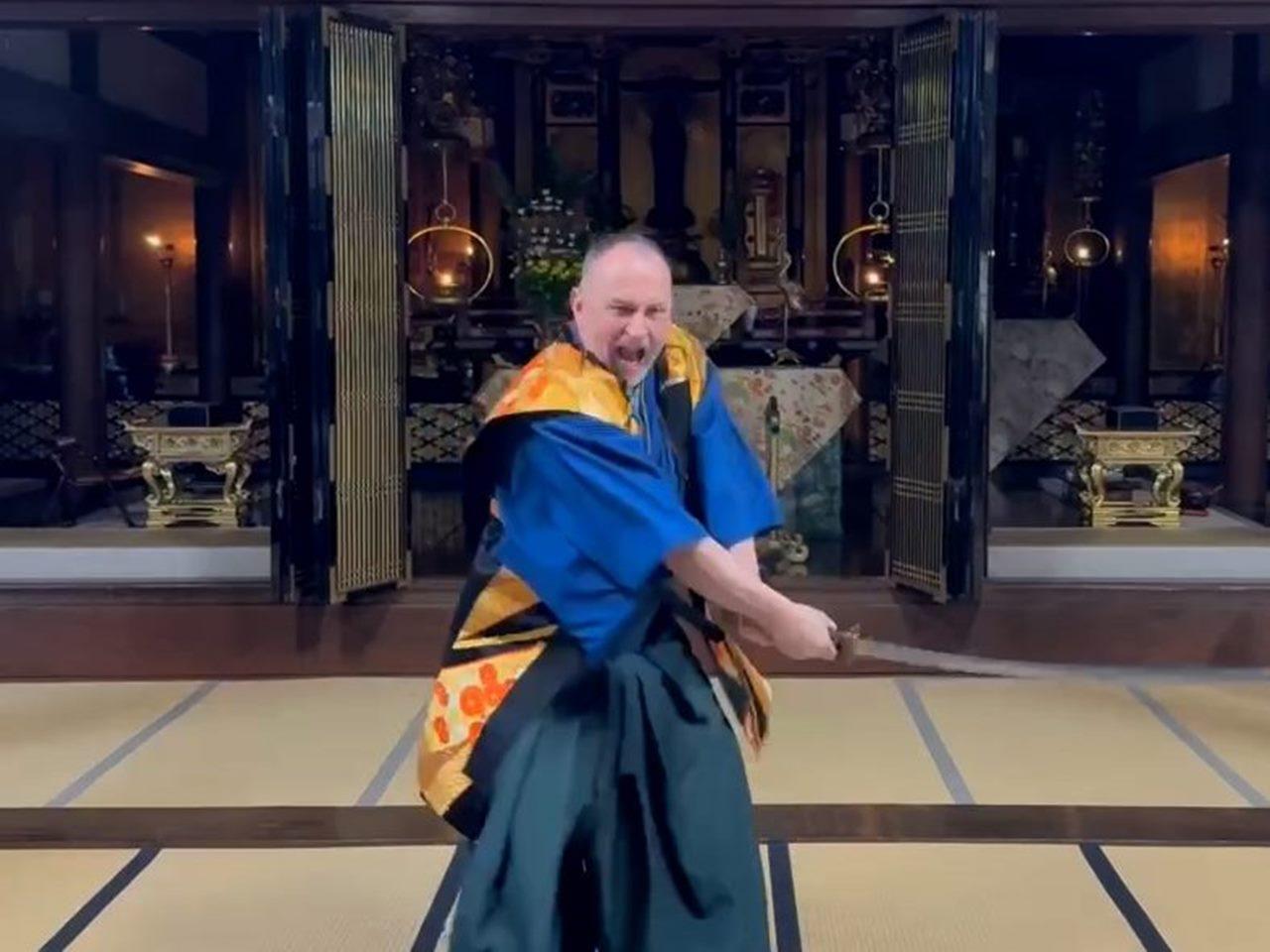
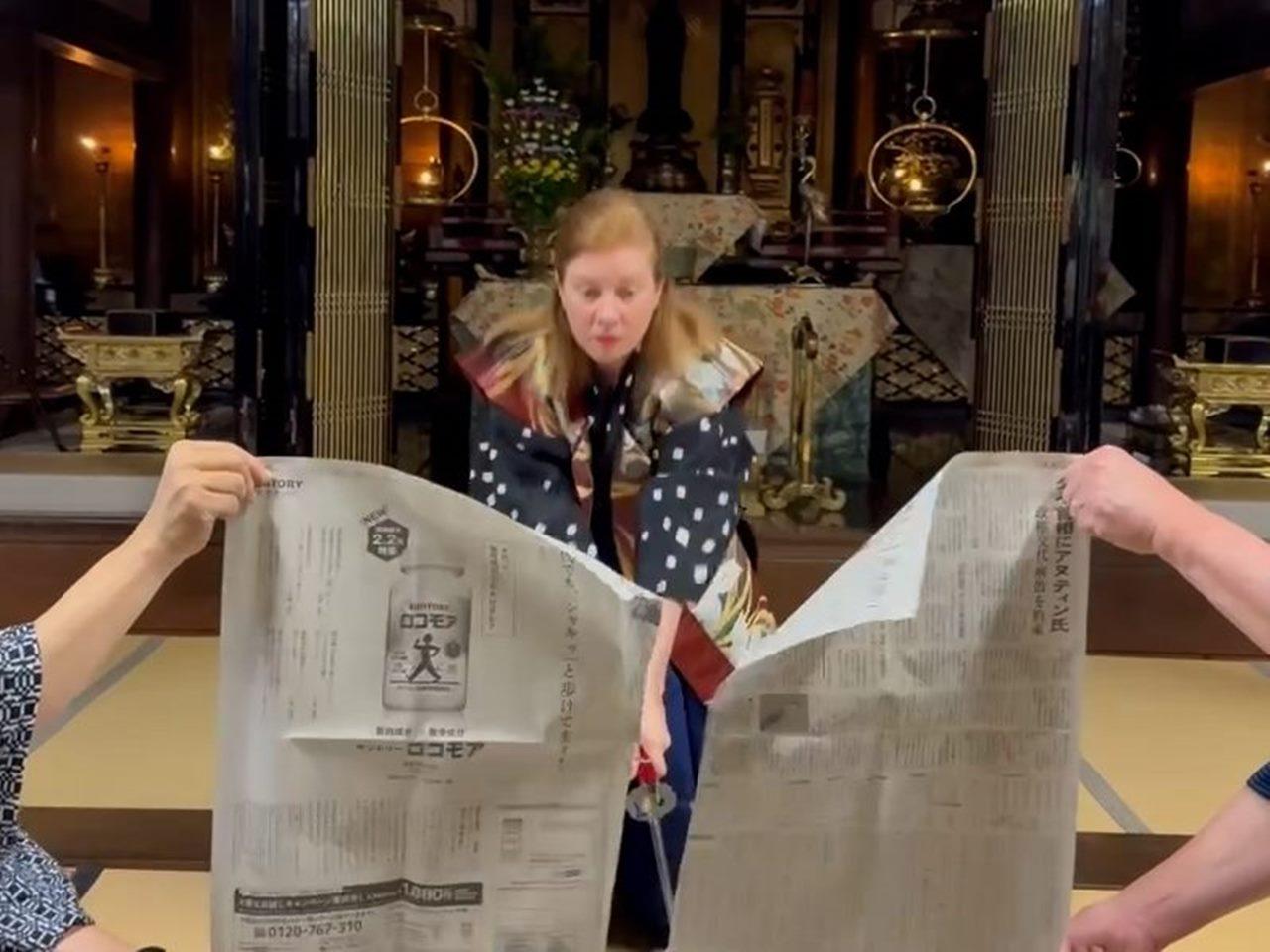
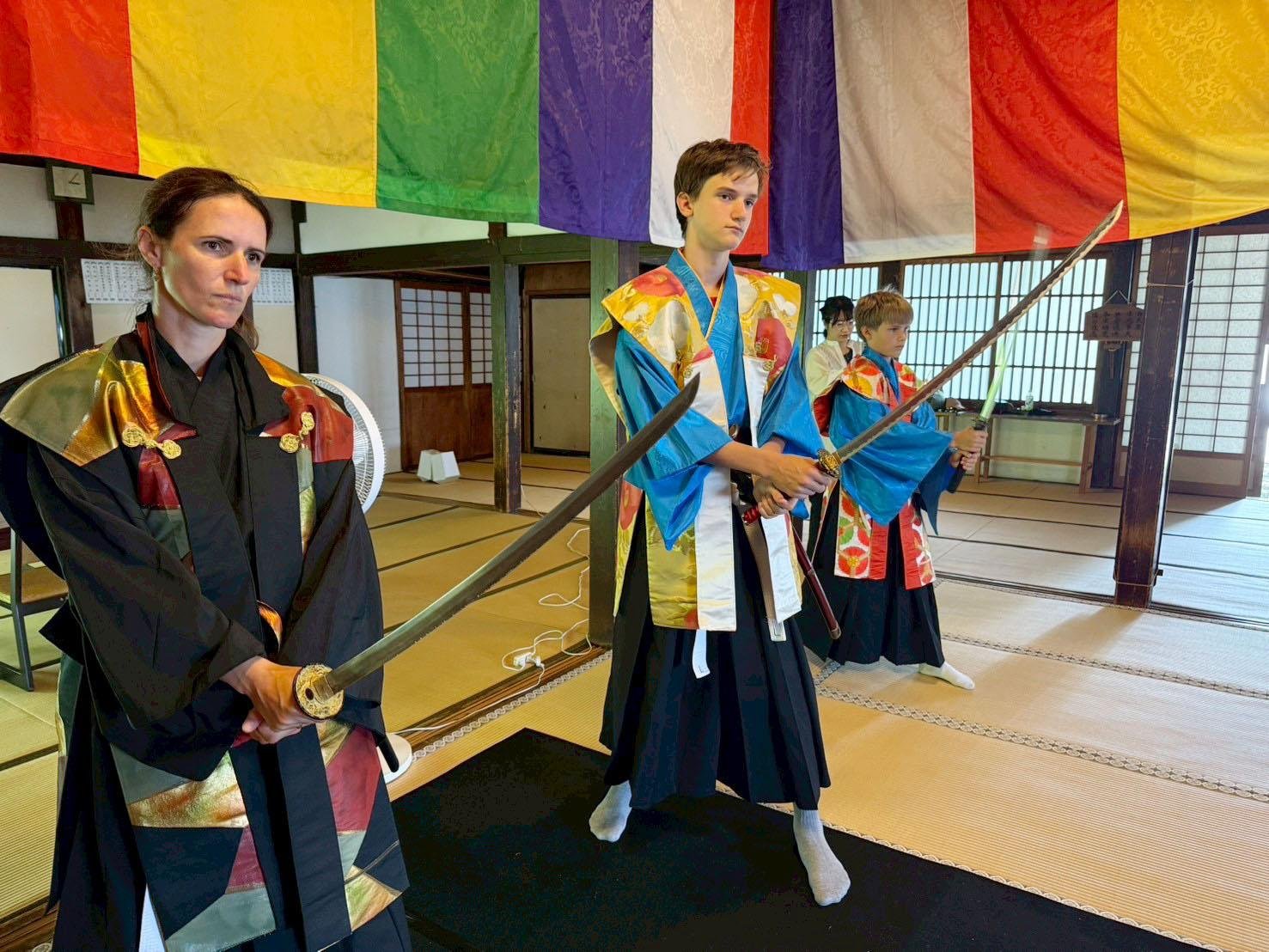
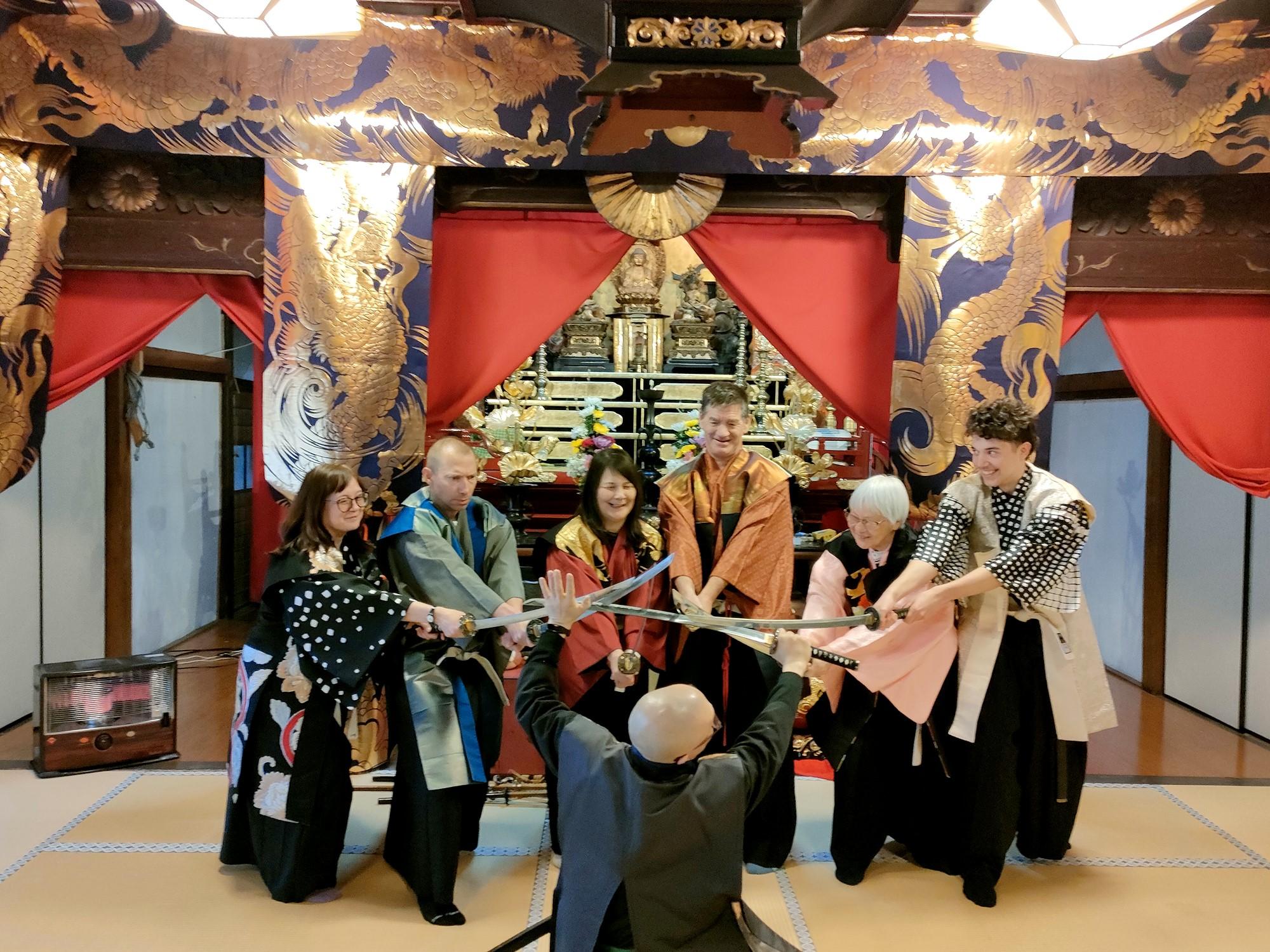
Samurai kimono, practice swords and a temple hall for a dojo.
Book Your Experience
Check Availability & Prices
Pick a date on the calendar. Cancel up to 24 hours in advance for a full refund.
Kanazawa's Samurai Experiences Side by Side
One lesson and two guided walks, checked October 2026.
| Feature | THE LESSON Temple Sword Lesson | Castle & Samurai Walk | Full Day with Matcha |
|---|---|---|---|
| From (per person) | $86 | $59 | $142 |
| What You Do | Learn sword basics in a samurai kimono | Nagamachi, the castle and Kenroku-en with a guide | Nagamachi, matcha, Kenroku-en, Higashi Chaya and the Shima teahouse |
| How Long | About 1 hour | 2.5 to 3 hours | A full day from 9:00 |
| Where It Starts | Teramachi, across the Sai River (address on the listing) | Korinbo, in front of the Starbucks | Kanazawa Station, by the Shinkansen gates |
| Entry Fees | None to pay | Nomura house and Kenroku-en included | Kenroku-en and Shima included |
| Who It Suits | Ages 12+, groups of two or more | First visit, context before sights | One day to see the whole city |
| Rating | 5.0 from 100 reviews | 4.9 from 351 reviews | 4.9 from 162 reviews |
| Check Availability | See This Option | See This Option |
The Kanazawa Samurai Walks
Guided walks through Nagamachi, the castle and Kenroku-en. No sword, a lot of context.
Kanazawa, Properly
The Sword Lesson, the Samurai District and the Rest of the City
The Short Answer
The hands-on samurai experience to book in Kanazawa is a swordsmanship lesson in a temple, and it is a good one. It lasts about an hour, you wear a samurai kimono, an instructor teaches your group the basics of handling the sword, and the session is photographed and filmed for you. It costs from $86 per person and holds a 5.0 rating from 100 reviews (checked October 2026).
The same operator also sells a 6.5-hour private samurai spirit tour that wraps the sword training in zazen with a Buddhist monk, a tea ceremony and a temple vegetarian dinner, from about $422 per person with one review (checked October 2026; not for children under 12). It is a whole afternoon and evening rather than an hour. Everything else sold under “samurai” in Kanazawa is a guided walk through the samurai district and the castle grounds, which is worth doing too, but you will not hold a sword.
Check the temple lesson's dates
What the Temple Lesson Includes, and What It Does Not
The lesson is run by ZEROUM LLC in an old temple it rents for the purpose, so you train on tatami in a temple hall rather than in a studio. The temple is not named on the listing, but the meeting point is: an address in Teramachi 5-chome (postcode 921-8033), the temple quarter across the Sai River from Nagamachi, on the same side of the river as Myoryuji. Take the exact address from your booking confirmation. The terms are short and worth reading before you book:
- Two people minimum. The lesson is sold as a private lesson, and a private-group option is offered on the booking page as well. One guest in August 2026 wrote that they were fortunate to have just the two of them, so if you want the hall to yourselves, choose the private-group option. Book the whole party in one reservation.
- About one hour: ten minutes to put on the kimono, ten minutes of explanation, thirty minutes of practice, then photos.
- Summer: the hall has no air conditioning, so wear light, comfortable clothes under the kimono.
- Language: English and Japanese. The English is simple and partly read from a script. A review from August 2026 put it as “easy to understand and we learned a lot”.
- Age and height: not suitable for children under 12. If anyone in your group is under 150 cm, contact the operator before booking.
- Included: the samurai kimono, the lesson, and photos and video of your session sent by email afterwards.
- Not included: an interpretation fee, and tips, which are optional.
- Zazen add-on: an optional 30-minute zazen session with a Buddhist monk can be added, followed by Japanese tea and sweets in the temple.
- Cancellation: free up to 24 hours before the start.
What it is not: a kendo class in armour, a cutting class with real blades, or a full martial-arts session. It is an introduction, taught carefully, in a setting that does a lot of the work. If you want two hours in kendo armour or a cutting class, those are sold in Kyoto and Osaka , not here.
Lesson or Walk: Which Kanazawa Samurai Experience to Book
The choice in Kanazawa is not between sword schools. It is between holding a sword for an hour and walking the places where the samurai lived, and the two fit into the same day.
Book whichever fits your day:
Hands on the sword
Swordsmanship Lesson at a Temple
The Kanazawa sword lesson at an everyday price: an hour, not a whole day. Ages 12 and up, two people minimum.
Check lesson dates →History on foot
Castle & Samurai History Walking Tour
Nagamachi first, then Kanazawa Castle and Kenroku-en with a guide. Nomura house and Kenroku-en admission is included in the price (checked October 2026).
See the walk →Short on time
Kanazawa Highlights with a Taxi
Kenroku-en, the castle, Nagamachi and the Higashi Chaya geisha district, with Kenroku-en and Nomura house entry and one taxi ride included.
See the tour →One whole day
Samurai, Matcha, Gardens and Geisha Full Day
Almost two hours in Nagamachi, a matcha stop, Kenroku-en and the Shima teahouse, with garden and teahouse entry included. Lunch is not.
See the day →Prices, ratings and review counts from our October 2026 data check; operators use seasonal pricing, so treat them as the shape of the market, not a quote.
A practical pairing: the lesson in the morning, then the samurai district on your own in the afternoon. The temple is in Teramachi, so allow for the walk back over the Sai River to Nagamachi, which is compact enough that a guide is a bonus rather than a necessity, and the map below covers the places worth paying to enter.
Nagamachi: Where Kanazawa’s Samurai Lived
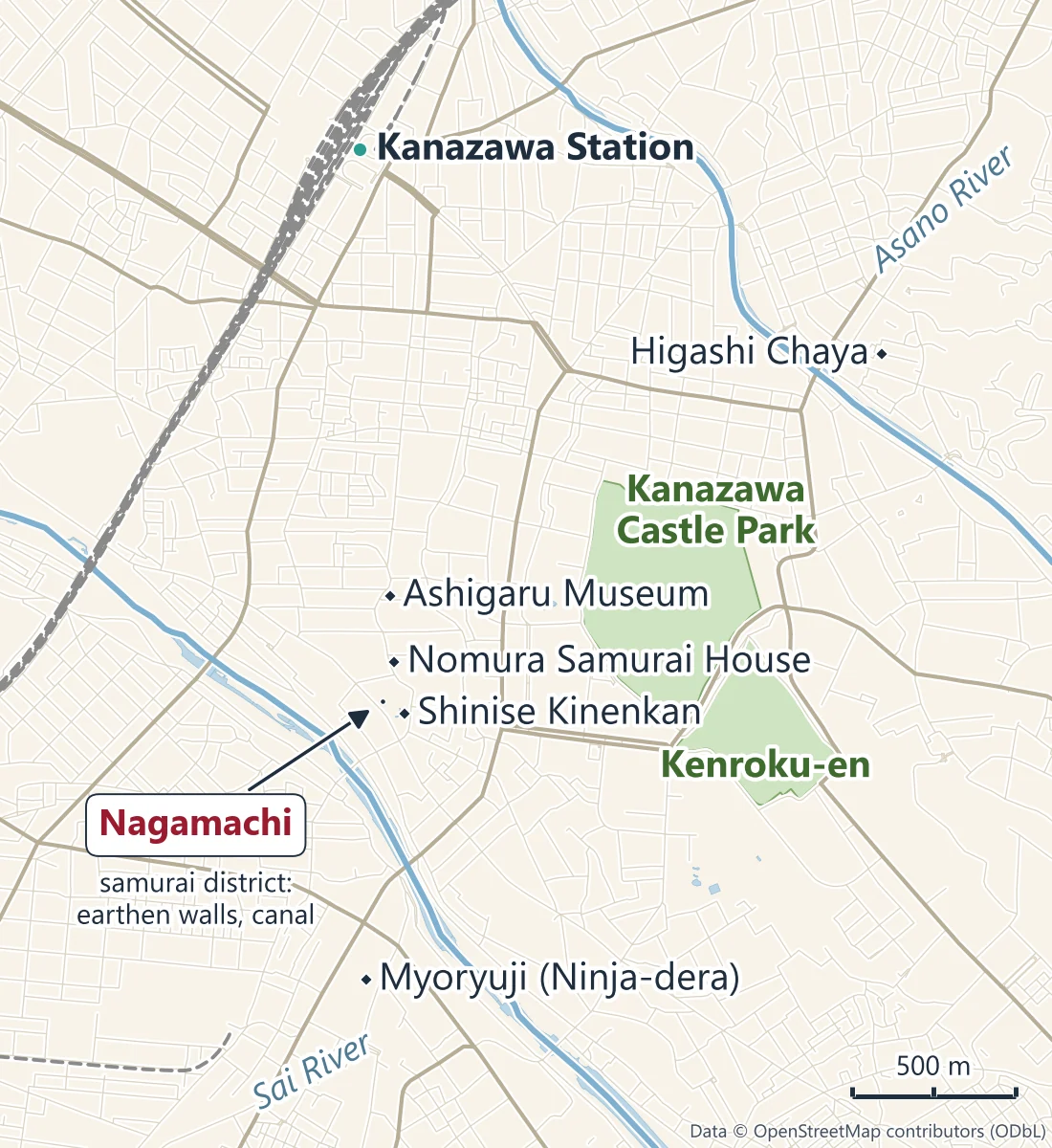
Nagamachi is the old samurai quarter below Kanazawa Castle. In the feudal era it housed middle-ranking retainers of the Maeda family, the lords of the Kaga domain, and the street plan still follows the Edo-period maps. What you walk through today are narrow lanes between earthen walls and the gates of the old houses, crossed by the Onosho canal, the oldest canal in the city. In winter the walls are hung with straw mats, called komogake, to protect them from snow.
The loop takes about an hour at an easy pace. Start from the Korinbo bus stop, about ten minutes by bus from Kanazawa Station. The places worth stepping into:
- Nomura Samurai House (Nomura-ke). The home of the Nomura family, samurai of the Kaga domain on a stipend of 1,200 koku. Its garden has a two-star rating from Michelin. Open 8:30 to 17:30, or to 16:30 from October to March, with last entry 30 minutes before closing; closed 26 and 27 December and 1 and 2 January. Adults pay ¥550. The house has announced a rise to ¥750 for adults from 1 April 2027.
- Ashigaru Museum. Two Edo-period houses of ashigaru, the foot soldiers at the bottom of the samurai ladder. Both were lived in until the 1990s, and next to the Nomura house they show how differently the two ends of the class lived.
- Shinise Kinenkan. Not a samurai house: the restored Nakaya pharmacy, a business founded in 1579, with a merchant’s shopfront downstairs. 9:30 to 17:00, closed Mondays, ¥100.
- Maeda Tosanokami-ke Shiryokan. The archive of a branch of the Maeda family, descended from the second son of Maeda Toshiie, founder of the Kaga domain: armour, art and documents handed down in the family. 9:30 to 17:00, closed Mondays, ¥310.
The Castle, Kenroku-en and Higashi Chaya
Maeda Toshiie entered Kanazawa Castle in 1583, and his family governed the Kaga domain from it for more than 280 years. The castle park is a few minutes’ walk from Nagamachi and free to enter. Three structures inside, the Hishi-yagura turret, the Gojukken-nagaya storehouse and the Hashizume-mon Tsuzuki-yagura turret, charge adults ¥320 and open 9:00 to 16:30, with last entry at 16:00.
Kenroku-en, across a footbridge from the castle, is the Maeda garden, and is counted among Japan’s three great gardens with Korakuen in Okayama and Kairakuen in Mito. Adults pay ¥320; cash, cards and IC cards are taken at the gate. It opens 7:00 to 18:00 from 1 March to 15 October and 8:00 to 17:00 for the rest of the year. Early risers get in free before opening time through the Renchi-mon and Zuishinzaka gates.
Higashi Chaya is the teahouse district across the Asano River. Its Shima teahouse dates from 1820, the year the district was laid out, and is a national Important Cultural Property. The samurai, matcha, gardens and geisha full-day tour includes its entry; the Kanazawa highlights tour with a taxi finishes in the district.
Myoryuji, the “Ninja Temple”
Across the Sai River from Nagamachi, Myoryuji is usually called the Ninja Temple (Ninja-dera). It has nothing to do with ninja. It is a temple built with trap doors and hidden rooms, a military outpost disguised as a place of worship. You can only see it on the temple’s own guided tour, booked in advance; the tours are in Japanese, with information in English. Admission is ¥1,200 for adults and ¥800 for elementary school children, tours run 9:00 to 16:00, and the temple closes on irregular days. If you would rather not arrange the reservation yourself, a guided walk with the Ninja Temple ticket included books it for you and adds a geisha district ($70, 4.7 from 53 reviews, checked October 2026). For the real difference between samurai and ninja, see samurai vs ninja .
Kanazawa or Kyoto for a Samurai Experience?
If you are choosing where in Japan to do this once, and want a full lesson, choose Kyoto: two hours of kendo in armour, a sword class and a forging workshop are all there, with far deeper review records (the Kyoto options ). samuraiexperiencekyoto.com covers that city’s lessons in more detail.
If Kanazawa is already on your route, do not swap it out. The temple lesson is short, but it is taught in an old temple, in a city whose samurai district is still standing, which is something a studio in a bigger city cannot offer. An hour with the sword and an afternoon in Nagamachi is a better samurai day than most of what is sold under the name.
Getting There and How Long to Stay
The Hokuriku Shinkansen runs from Tokyo to Kanazawa; the fastest Kagayaki trains take about two and a half hours. From Kyoto or Osaka there is no direct bullet train: since the line was extended in March 2024, you take the Thunderbird limited express to Tsuruga and change to the Shinkansen there, about two hours from Kyoto in all.
One full day covers Nagamachi, the castle, Kenroku-en and Higashi Chaya on foot. Two days let you add the sword lesson, the museums and Myoryuji without rushing, and two nights fit neatly between Tokyo and Kyoto.
For the rest of the country, see the best samurai experience in Japan, city by city and what a samurai experience costs .
Opening hours and entry fees as published by each site in October 2026.
Guest Reviews
What Guests Say
5.0/5
from 105 verified guests
"We absolutely loved Team Shin! This was such an amazing experience with engaging and kind teachers. We were able to choose our kimonos. We learned basic history of the samurai. The lesson was super interactive in a stunning temple. Our hosts took many photos and videos for us. We would highly recommend this and would do it again. Please don’t hesitate to book this lesson!"
"What an unforgettable experience! We booked this last minute and had the time of our lives. The guide is so friendly and passionate about the craft and history of samurai. We would love to come back and do it again when we visit Kanazawa next"
"It was a great samurai experience in Kanazawa. In a beautiful temple and with a very nice teacher. Totally recommend it!"
"Really excellent! The host was really great and was able to convey his passion and culture. We loved it."
"Very nice class led by an enthusiastic teacher. It's nice to get photos and a video afterwards."
"We had a fantastic time. It was so much fun and the 7 of us all loved it. The instructor was friendly, helpful and fun. There was also a girl there taking pictures and video and they were sent to us after the event at no cost. I would highly recommend this."
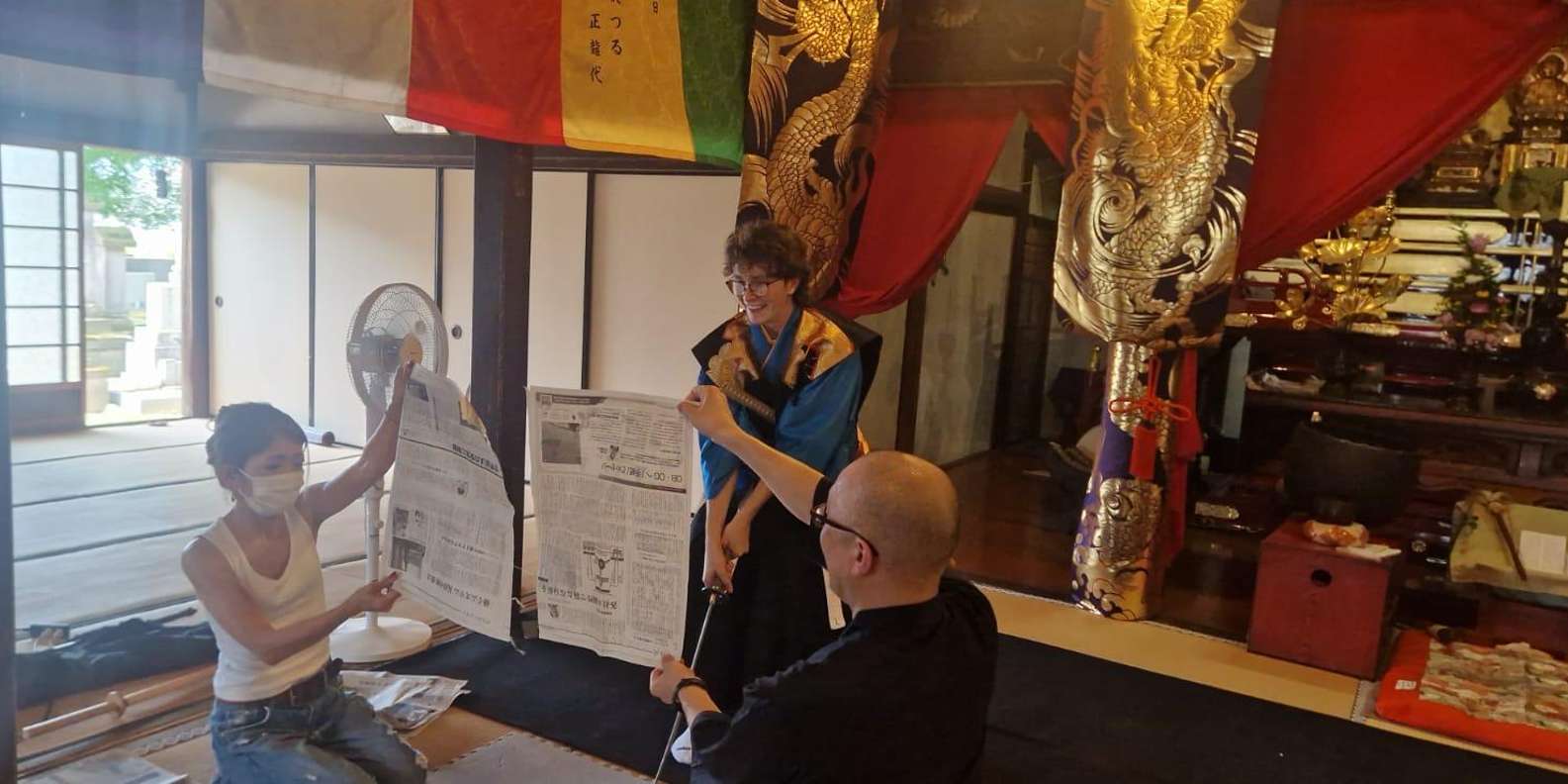
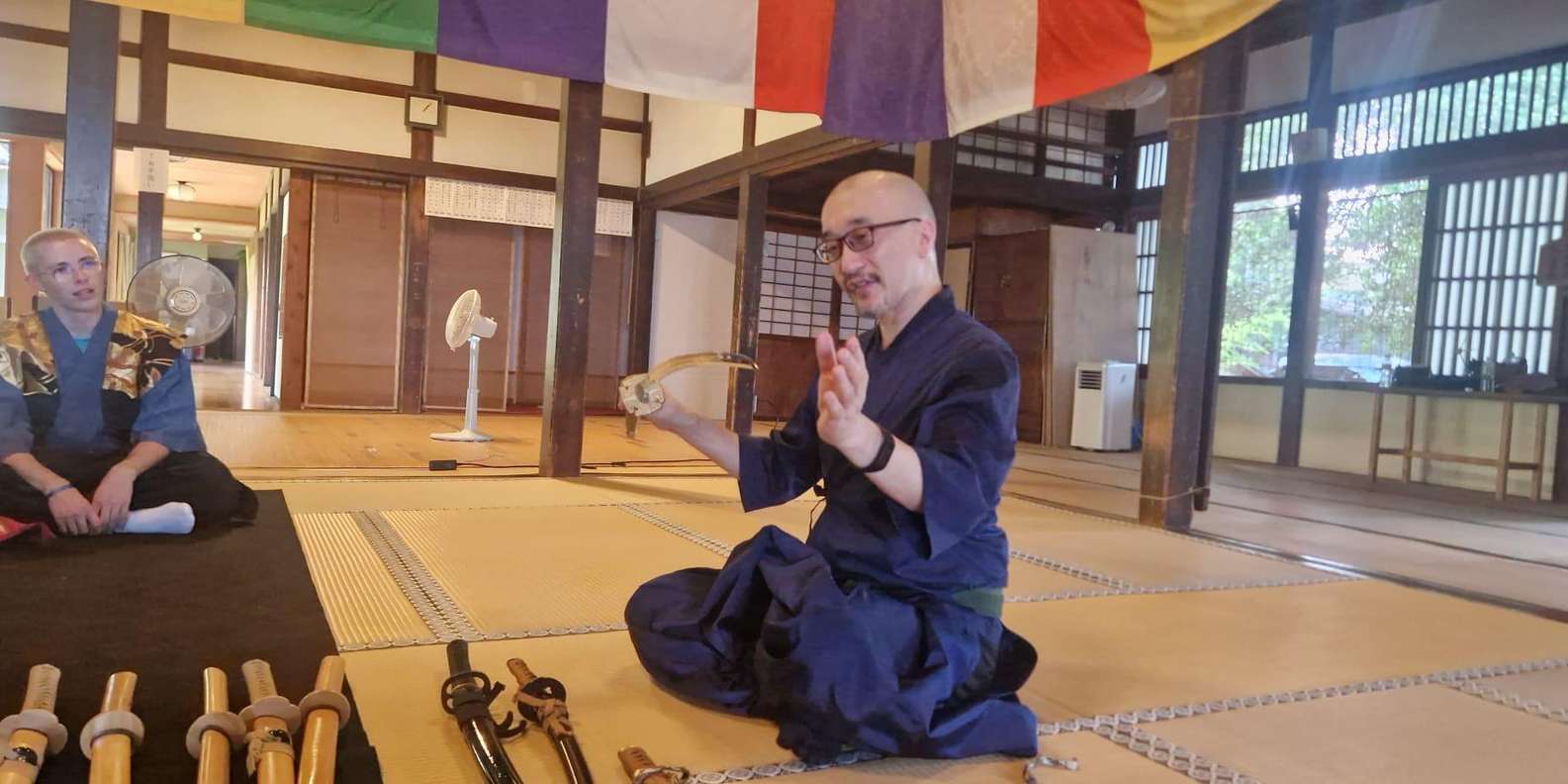
"A fantastic experience that we will remember forever! Our guide was very knowledgable and an excellent teacher. It was great getting to wear the traditional dress and we had lots of fun practicing the movements. Thank you!"
Read all 105 verified reviews
See All ReviewsA Sword Lesson in a Kanazawa Temple
Rated 5.0 by 100 guests (checked October 2026), from $86 per person: about an hour of sword basics in a samurai kimono, with photos and video of the session sent afterwards. Starting from $86 per person.
Check Lesson DatesSamurai Experience in Kanazawa: Questions
The lesson, the samurai district and planning the visit.
Nagamachi. It is the old samurai quarter below Kanazawa Castle, where middle-ranking retainers of the Maeda lords of the Kaga domain lived. The lanes still follow the Edo-period street plan, lined with earthen walls and the gates of old houses and crossed by the Onosho canal, the oldest in the city. In winter the walls are hung with straw mats (komogake) against the snow. A loop on foot takes about an hour from the Korinbo bus stop.
Two hands-on sword experiences from the same operator, and a handful of guided walks. The everyday one is a swordsmanship class in a temple, from $86 for about an hour, rated 5.0 from 100 reviews. The same operator runs a 6.5-hour private samurai spirit tour that adds zazen, a tea ceremony and a temple dinner, from about $422 per person with one review. The walks cover Nagamachi, the castle and Kenroku-en: a castle and samurai history walk from $59 (4.9, 351 reviews), a highlights tour with a taxi from $54 (5.0, 312 reviews) and a full day with matcha and a geisha teahouse from $142 (4.9, 162 reviews). Figures checked October 2026; the comparison table sets them side by side.
Yes: the swordsmanship lesson at a temple is the one to book. You change into a samurai kimono, get a short introduction to the samurai and the sword, then learn stance, drawing and cutting movements with an instructor. It lasts about an hour, it is sold as a private lesson with a minimum of two people (a private-group option is offered too), and the photos and video of your session are emailed to you afterwards. It is an introduction, not a full kendo or cutting class. Check the dates.
It is taught in English and Japanese, and it is not suitable for children under 12. The English is simple and partly read from a script, which keeps it easy to follow. If anyone in your group is under 150 cm tall, contact the operator before booking. The price is per person, the minimum booking is two people, an interpretation fee is not included, and you can cancel free of charge up to 24 hours before the start.
Buke yashiki, which means warrior residences. In Kanazawa the name is on the district itself: Nagamachi Buke Yashiki, the Nagamachi samurai residence area. The Nomura family house there is open to visitors, with its rooms and a garden that has a two-star rating from Michelin. Nearby, the Ashigaru Museum keeps two houses of foot soldiers, the lowest rank of samurai, which were lived in until the 1990s, so you can compare both ends of the class on one walk.
¥550 for adults, rising to ¥750 from 1 April 2027. The house is open 8:30 to 17:30 from April to September and 8:30 to 16:30 from October to March, with last entry 30 minutes before closing, and it closes on 26 and 27 December and 1 and 2 January. The castle and samurai history walk includes the Nomura house ticket in its price (checked October 2026), and so does the Kanazawa highlights tour with a taxi.
It kept the shape of a castle town. The Maeda family ruled the Kaga domain from Kanazawa Castle for more than 280 years, and the city still has its samurai district at Nagamachi, its teahouse district at Higashi Chaya, and Kenroku-en, counted among Japan's three great gardens. All of them sit within walking distance of one another, which is why a single day covers so much here and why the samurai history feels less like a museum exhibit.
Higashi Chaya is the one to see first. Its Shima teahouse was built in 1820, the year the district was laid out, and is a national Important Cultural Property that you can go inside. It sits across the Asano River from the castle and is a stop on both the highlights tour with a taxi and the full-day tour. Kazue-machi, also on the Asano River, and Nishi Chaya, a few minutes from Myoryuji, are two more teahouse districts.
It is smaller and easier, not better. Kyoto has far more to see and the deeper choice of samurai experiences, including kendo in armour and a sword-forging workshop. Kanazawa has a preserved samurai district, a teahouse district and one of Japan's three great gardens close together, and is much quicker to get around on foot. If you want one serious samurai lesson, plan it in Kyoto; if Kanazawa is on your route, the temple lesson and Nagamachi make a fine samurai day.
One full day for the main sights, two to do them without hurrying. Nagamachi, the castle park, Kenroku-en and Higashi Chaya are close enough to cover on foot in a day, and guided tours do the four in about three hours. A second day leaves room for the hour-long sword lesson, the Nomura house and the other museums, and Myoryuji, which can only be visited on a reserved tour.
Not directly. Since the Hokuriku Shinkansen was extended in March 2024, the trip from Kanazawa to Kyoto means the Shinkansen to Tsuruga and a change there to the Thunderbird limited express, about two hours in all. The same route serves Osaka. Kanazawa to Tokyo is direct on the Hokuriku Shinkansen, about two and a half hours on the fastest Kagayaki trains.
Not as a class. The Meiji government dissolved samurai status in the 1870s: former samurai became shizoku, and an edict of 1876 ended their right to carry swords in public. Samurai families continued, though, and their houses did too. In Kanazawa you can visit the Nomura family residence in Nagamachi and the archive of the Maeda Tosanokami family, a branch of the Maeda lords, with armour and documents handed down through the generations.
Kanazawa for the places, Kyoto for the lessons. Kanazawa's Nagamachi is a surviving samurai district next to the castle the samurai served, which makes the history easy to picture on foot. Kyoto has the widest range of hands-on experiences. Tokyo has the big samurai museum. Our city-by-city guide compares them with prices and review counts.
No. It is a temple built with trap doors and hidden rooms, a military outpost disguised as a place of worship, and the ninja name is a nickname. It sits across the Sai River from Nagamachi. You can only go inside on a guided tour booked in advance; tours are in Japanese with information in English. For the real difference between samurai and ninja, see samurai vs ninja.
Still have questions? Email us at info@samuraiexperiencejapan.com